Kim: Hello, and welcome to It’s Full Time to Travel Time. I am your host, Kim, and I’ve got my awesome co-host, Isaac, here.
Isaac: Hey, hey.
Kim: What’s up, everyone? Today I’m so excited, because we’re doing things a little differently. In the last episode, we talked about the beginning of a three-month epic road trip. This time, we’re fast-forwarding to the end of that road trip. And Isaac, we learned some lessons at the end, didn’t we?
Isaac: We certainly did.
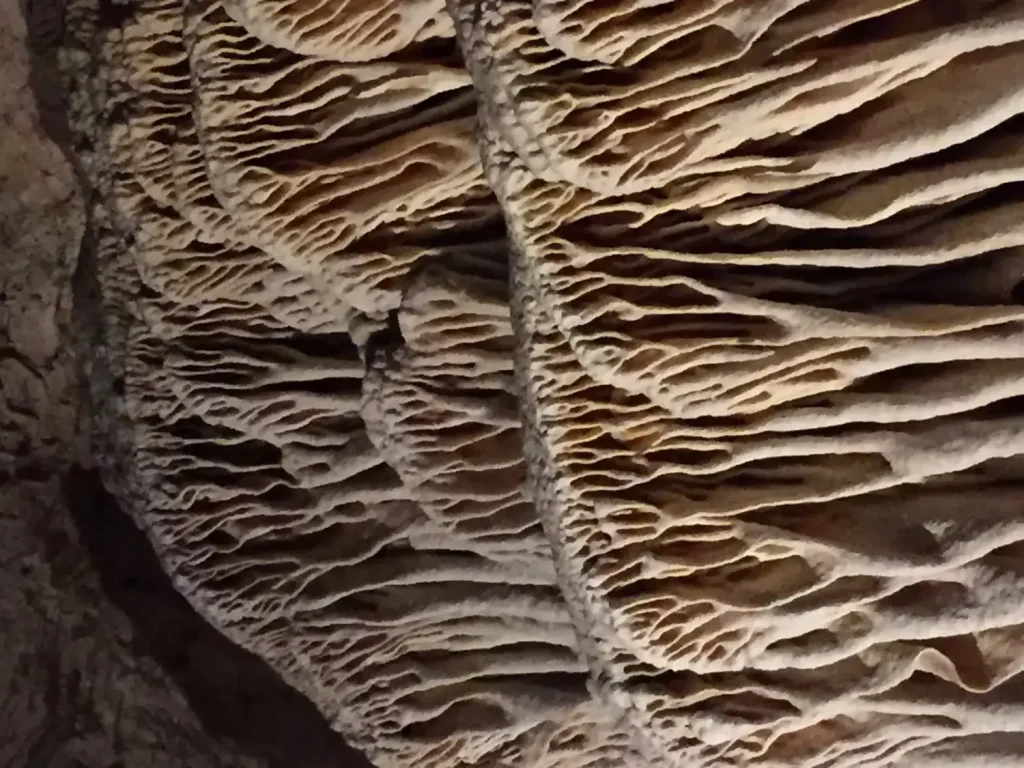
Kim: We’re going to talk about what went wrong after this three-month road trip and, even more exciting, how we started building a business to fuel this travel lifestyle. I want to talk about Carlsbad Caverns National Park—one of the last places we visited on the road trip.
Isaac: Yeah—turkeys were involved. If you have a cave, you always have turkeys.
Kim: (laughs) Right.
Isaac: It’s my favorite cave system in the U.S. that we’ve explored so far.
Kim: That’s your favorite?
Isaac: Hands down.
Kim: Why? Give me three bullet points—why is it your favorite?
Isaac: Alright. Number one: you can take a self-guided tour. It’s one of the only cave systems we’ve ever been in that allows this. Number two: it’s huge—it makes you re-comprehend the planet beneath your feet. Number three: there are some very unique features far below ground that you don’t normally see.
Kim: Ooh, let’s talk about that right now. For those who haven’t visited, there are some things you should know. Number one—like Isaac said—it’s one of the only caves in America with self-guided tours.
Isaac: In America.
Kim: If you’re anything like us, you don’t love standing in slow guided groups—we like to explore at our own pace. There are two self-guided routes at Carlsbad: The Big Room and the Natural Entrance.
Isaac: The Big Room is wheelchair accessible and has an elevator to bring you up and down.
Kim: Huge! And the Natural Entrance is super cool—zigzagging 750 feet down into the mouth of the cave.
Isaac: We hiked down the Natural Entrance and took the elevator back up.
Kim: Isaac’s smart. Another cool thing: there’s a Bat Amphitheater at the top before the zigzags. From about May through the end of the year, there’s a bat flight program—thousands (and I mean thousands) of bats fly out of the cave at sunset to eat all the bugs. It’s meant to be magical.
Isaac: We weren’t aware of it at the time—so learn from us. If you’ll be there during those months, set aside time at dusk.
Kim: And it’s free. Just show up and sit in the amphitheater.
Isaac: No permits. Just go.
Kim: The amphitheater is a decent size—probably holds a couple hundred people.
Isaac: We’ll definitely go back to see it at some point.
Kim: We have to. Another thing I’m surprised you didn’t put on your list: it’s the deepest place to buy food underground.
Isaac: Furthest below sea level restaurant—well, it used to be a restaurant; now it’s more of a snack shack. But to my understanding, you can order food about 750 feet below the surface.
Kim: So cool. We were hungry and almost 800 feet underground, so…
Isaac: We mostly had snacks. We ordered just to say we did.
Kim: (laughs) They have seating, so if you’re tired from walking the self-guided tour, you can sit.
Isaac: It’s a whole little shopping plaza down there—souvenirs and whatnot. One of the deepest shopping plaza/restaurant-ish places that exist.
Kim: Even if you’re not hungry, buy something. Once-in-a-lifetime “I bought this underground” bragging rights.
Isaac: Yeah.
Kim: Lastly—we did a trail in Carlsbad that wasn’t underground. Remember?
Isaac: Yeah, Slaughter Canyon. There’s a cave there that requires a guided tour, but we hiked the canyon—very green, very pleasant.
Kim: Mountainous, too. And there was nobody there.
Isaac: We did Carlsbad Caverns on a Thursday, then on Saturday—when it gets crazy—we went to Slaughter Canyon. We didn’t see a single person.
Kim: Not one. We hiked up the canyon, could see for tens, if not hundreds, of miles—nobody.
Isaac: But we weren’t alone.
Kim: (laughs) I know where this is going. Let me see if you can guess who else was with us…
Isaac: That wasn’t a turkey—that was Kim.
Kim: It was me. This story is ridiculous. We drove to Rattlesnake Spring, a day-use area.
Isaac: We’d finished Slaughter Canyon and I saw another parcel on the map that was part of the park—sometimes national parks own non-contiguous land.
Kim: It was weird. You drive through a tiny residential area—green grass, full trees—very different from being in a cave.
Isaac: Yeah.
Kim: As we drove in to park, I saw a turkey on the ground looking up at a tree.
Isaac: I told her to stop—rolled down the window. “Kim, there’s a turkey in this tree.”
Kim: “What are you talking about?” I look up, and sure enough—a turkey in a tree. I didn’t know turkeys could get in trees! I started joking, “Bob, what are you doing up there, Bob?” because the turkey on the ground was staring up like, “How did he get up there?”
Isaac: “What are you doing up in that tree, Bob?”
Kim: Then the turkey in the tree tried to get out—well, not tried. He did.
Isaac: It wasn’t graceful. More of a…
Kim: Graceful fall?
Isaac: (laughs) Not graceful—more of a plunk. But he was fine.
Kim: He got up, walked around—“Alright, Bob’s okay. Let’s move on.”
Isaac: You heard it here first: turkeys sometimes sleep in trees.
Kim: We looked it up. They like cottonwood-type trees.
Isaac: We should do a whole episode on weird animals we’ve found in trees.
Kim: More than you’d expect!
Isaac: I can think of several already.
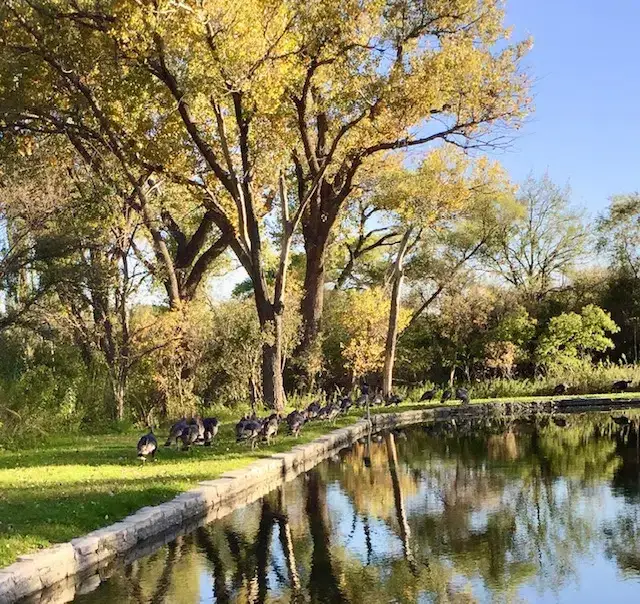
Kim: Don’t ruin the episode! Anyway, at Rattlesnake Spring we found a man-made water area—think long rectangle, like a lap pool—fed by an old spring preserved for history.
Isaac: Right—how early settlers got water there.
Kim: We walked over and—holy crap—I counted 32 turkeys in a single-file parade walking along the water’s edge.
Isaac: All single file. Incredible.
Kim: What do you think was going through their minds?
Isaac: A parade to celebrate life.
Kim: Or Bob getting out of the tree successfully.
Isaac: “Good job, Bob.”
Kim: I had to count. I grew up in Indiana and I don’t think I’ve ever seen 32 turkeys together.
Isaac: The most we’d seen before was in Great Smoky Mountains National Park—maybe 15 total, seven together. Not 32, single file, having a parade.
Kim: Wild. Oh wait—do you hear that? I don’t think it’s a turkey…
Isaac: Are you sure?
Kim: It’s a National Park Adventure Quest! Remember the rules? I ask you a question, you answer—don’t use your brain.
Isaac: Use your… heart?
Kim: Whatever pops in—spit it out.
Isaac: You made the rules! That’s the opposite of simple—but okay.
Kim: Question one: What’s the most unusual thing you’ve ever found in a cave?
Isaac: The first thing that popped into my mind isn’t a national park—it’s a cave in Switzerland.
Kim: My mind went to Kanarra Falls, but that’s not it.
Isaac: This was a raging river and waterfall inside a cave we hiked through—so loud—felt like walking into Rivendell.
Kim: Lord of the Rings vibes—water pouring out of a castle.
Isaac: The cave is St. Beatus (Beatus) Caves.
Kim: Excellent. Your turn to ask: (laughs)
Isaac: Kim, what’s your favorite chipmunk experience in a national park?
Kim: Easy—Mount Rainier National Park. We were tired, found a bench with a glacier view. A chipmunk ran back and forth, then jumped between us, right in the tiny space on the bench. I slowly put out one finger and petted the stripe on its back. He stayed for a few strokes, then zipped away. We freaked out quietly, then loudly.
Isaac: We also had a marmot-spotting contest on that trail. Kim’s better at spotting animals; I’m better at spotting movement. I won—18 marmots to her 12 or 15. We saw around 30 marmots on one hike.
Kim: Epic hike. I don’t remember the name, but it takes you closer to the glacier—we crossed snow. That trail can take you to the top with the right guide and gear, which we didn’t have.
Isaac: Next question: What’s something weird you saw someone else doing in a national park?
Kim: The first thing that comes to mind is… us?
Isaac: (laughs) Yep. Badlands National Park. We hiked onto the top of some dunes—views were mind-blowing—sun shining—so we started dancing. No one else hiked up, but people in the parking lot could see us.
Kim: He twirled me. It was adorable.
Isaac: Later, as we got in the car, a woman came up and said, “Were you the ones dancing up there? You made my day.” I was a little embarrassed, but happy.
Kim: I love it when the “weird thing” is us.
Isaac: Alright, Kim—most unique rock formation you’ve come across in a national park?
Kim: You won’t see this coming: Pinnacles National Park (California). It’s underrated—pointy pinnacles, and grottos with huge boulders dangling overhead, staircases weaving through. The rocks are so unique.
Isaac: The cave system there—there are types, and those are some of the longest of that type in the world, which is why it’s a national park.
Kim: Is “grotto” a type of cave system?
Isaac: More like a cool place to hang out. (laughs)
Kim: Okay, last one: What’s the most memorable tree and why?
Isaac: The Tree of Life—technically part of Olympic National Park even though it’s disconnected. It looks like it’s climbing over a mini canyon—the soil beneath eroded, but the tree still clings on.
Kim: And it’s on a beach. I had it on my bucket list even before we met. Isaac found it the night before our drive—wasn’t part of the initial plan.
Isaac: True. I often wake up in the night and plan the next day. (laughs)
Kim: Picture it: huge tree, exposed roots on one edge of a mini cliff, roots stretching over the gap to the other side—like it’s crawling across a canyon. There’s also an old shipwreck on the beach, a metal skeleton—like a grid.
Isaac: I could keep answering; we’ve seen incredible trees. But that’s the first that came to mind.
Kim: Okay—what was the funniest park ranger interaction?
Isaac: Shout out to all park rangers—we appreciate you. Funniest was at Great Smoky Mountains National Park. I asked an older ranger, “When is fall here?” He said, “You know—it’s the same every year… same as everywhere in the U.S.”
Kim: (trying not to laugh)
Isaac: I said thanks, then explained we’ve traveled all over and peak fall varies by weeks depending on location and elevation. We’ve even hit Pando in Utah—the largest living organism on the planet—a whole forest of cloned aspens that turn color all at once. If you’re off by a day or two, you miss the brightest yellow.
Kim: That’s why you need to understand your fall timing. We literally quest for fall every year—Flagstaff, Sedona—somewhere it’s happening.
Isaac: Fall looks different everywhere—worth chasing.
Kim: Changing gears. We got back from three months on the road and realized something. We rented a house in Mesa—very cool house. One day I couldn’t find Isaac—he was in a tree.
Isaac: (laughs) I like climbing trees. This one had a weird fruit—grapefruit-sized, light color. Not great to eat, but good to squeeze into vodka. I’d climb up and drink a vodka-fruit cocktail in the branches.
Kim: Nature boy. Anyway, after our travels we realized: we’re kind of poor.
Isaac: We didn’t have much saved. Money from other ventures got spent during those three months because we didn’t work much.
Kim: It was our first big travel trip. We wanted to figure out how to live this lifestyle and not be poor.
Isaac: The trip was amazing, but coming home was a bummer. We had this house and couldn’t furnish it—sleeping on a mattress on the floor, thrifted furniture over time.
Kim: We made do—but could have done it better.
Isaac: We didn’t want to be that poor after a long trip again—we wanted to travel full-time.
Kim: So what was the solution?
Isaac: I’d already introduced Kim to entrepreneurship—we talked in a previous episode about helping her start her pet sitting company. I’d been freelancing about eight years. We listed everything I’d done and asked: what provides the most value? That’s where the money is.
Kim: And what wasn’t going away anytime soon—Google.
Isaac: Exactly. I’d had a lot of success helping locally owned businesses with Google Maps—optimizing profiles and driving traffic. I never built a whole business around it—just offered it when I liked a business. It always worked.
Kim: I was still in the veterinary field—then selling dog food for Purina—making more than I did as a vet tech after nine years, which blew my mind.
Isaac: So we decided to launch LocalFi together—helping local businesses with their digital presence. I thought it would be easy: offer it, people want it, Kim is friendly and talkative, she’d network and bring leads, I’d sell and do the work.
Kim: That’s what Isaac thought. Reality: I’m good at talking to people—people usually like me—but I didn’t expect people to run away from me. (laughs)
Isaac: We failed badly for three months—argued more, just getting by financially. I freelanced part-time and worked full-time on LocalFi; Kim sold dog food full-time and did LocalFi part-time. We didn’t understand how to grow it or how to talk about it.
Kim: He shadowed me at a networking event—he would listen while I talked.
Isaac: The woman running the space said hi; Kim word-vomited. I saw the woman’s eyes go wide, arms crossed, feet turning away—then she literally ran.
Kim: I learned body language later. I kept talking as she backed away—and I stepped toward her. Isaac grabbed my arm so I wouldn’t chase her. (laughs)
Isaac: We paused. I said, “You said a lot—it was overwhelming. Remember the quick pitches we wrote?” We decided: next person asks what we do, Kim says one sentence, then be quiet.
Kim: “Wait—be quiet?” But I did it. We said hello, he asked what we do, I used one line and stopped. His eyebrows went up—interested—and he asked, “Can you tell me more?” You bet I can.
Isaac: That was a breakthrough—for Kim and for our business. Sometimes things just need a small tweak.
Kim: You don’t know what you’re not good at until someone kindly tells you.
Isaac: A lot of people who want a travel lifestyle try to build an online business—which is great—but early on, especially for B2B, networking is essential. Leads come via networking and referrals.
Kim: We started in the “minor leagues” of networking—easy to find online, open to anyone—lots of solopreneurs, salespeople, realtors.
Isaac: From those events we met Manny, who invited us to the major leagues—more exclusive, usually invitation-only, not advertised online.
Kim: Translation: build relationships; people will invite you upward.
Isaac: That’s how we grew initially. Since COVID, we haven’t networked like before, but we’re still in regular contact with many people we met through both groups—and doing business with them.
Kim: Regardless of how business is going, you should always have a handful of referral partners you’re nurturing.
Isaac: Networking tips: First, craft your elevator pitch—30 seconds or less—one to two sentences that intrigue. When asked what you do, say it and let them talk.
Kim: Be quiet. (smiles)
Isaac: Ask: “What are you working on right now that really excites you?” Get them talking about what they’re passionate about.
Kim: Everyone likes talking about themselves. Great question.
Isaac: You almost never make sales at the first event—you need to show up, be known, build relationships. If you can help their projects—connect them with others—they’ll remember and reciprocate.
Kim: The reciprocation principle—one of the strongest across cultures and ages. Help someone, they’ll help you an equal or greater amount.
Isaac: Another tip: if someone is a good connection, don’t say, “I’ll contact you later.” Set the meeting right there—coffee, lunch, whatever. You don’t have to sell—just explore how to help each other.
Kim: If they resist scheduling, say, “Let’s book it tentatively.” It gets on the calendar and often becomes real.
Isaac: Timing: you never know when a connection will come through. If there aren’t local events, LinkedIn is great for digital networking. Not as powerful as in-person, but our first new client came via LinkedIn—three years after the initial connection.
Kim: Three years!
Isaac: Back in Rochester, I connected with a guy’s son, who connected me to Brett. I introduced Brett to someone else who helped him. Three years later I moved to Arizona; I saw Brett was in Sedona. I reached out—he remembered I helped him with nothing expected in return. He connected us to friends—our first client. It took three months to close and came from a three-year-old relationship.
Kim: That’s timing. Keep giving; reciprocation will serve you.
Isaac: Another client: we met at a networking event, hit it off, met once a year for years—no business—then recently he brought us on for marketing. Now we have a joint partnership combining our services.
Kim: You can’t force it. Keep it natural; the universe will hand you the right opportunities.
Isaac: Wild story: we were at a networking event, a franchise consultant stood up. I wrote his name down to meet him. At the end he glances over: “Oh, and Isaac—I think we might be childhood friends.” He sits. I look at my notes—Justin! We hadn’t seen each other since grade school. We hugged; the room clapped. It took three years to figure out how we could help each other; now he’s one of our biggest referral partners. We help his clients grow to open multiple locations.
Kim: Reciprocation explained: Isaac invited Justin to many birthday parties and fed him a lot of cake. (laughs)
Isaac: (laughs) Maybe that’s it.
Kim: Point is: you don’t know where networking will lead. If you show up to help others, you’ll build the relationships that make all the difference.
Isaac: Also—don’t live in expectation. Be patient, keep giving.
Kim: And note: few clients came from us talking directly to them. Most came because someone in the group knew what we did and introduced us to the right person—warm leads beat cold calls.
Isaac: Most people you talk to won’t need your services—but they know someone who does. If they like you, they’ll introduce you.
Kim: Quick bullet of wild invites we’ve gotten just by being friendly and giving: an investor boat on Lake Washington, a look at Bill Gates’ house, Mansion Mondays—what?!
Isaac: That was in Seattle. Through Phoenix connections, we got invited to an exclusive group in Seattle—very nice hotel. From that, the investor boat invite. The next day someone asked how we got invited—he’d been in Seattle for three years trying to get in. We’d been there one week.
Kim: (grins) Yep.
Isaac: Anyway, that’s our networking advice. I know it sounds counter to purely online business—but it’s instrumental.
Kim: You need a foundation. You can’t just start a business, assume clients will pour in, and go travel. Put in the work.
Isaac: Two impactful books for entrepreneurs: We failed for the first three months partly because our messaging was off. I’d built a website—it was okay—then I read Building a StoryBrand by Donald Miller.
Kim: StoryBrand—Donald Miller.
Isaac: It teaches you to market using the Hero’s Journey. Marketing becomes telling an engaging story, not pressure. It even details website structure. I realized our site was crap—scrapped it and rebuilt within the StoryBrand framework. Huge difference in engagement and clarity.
Kim: Massive upgrade. (If you want to see our business: LocalFiSEO.com.)
Isaac: The other book: The E-Myth Revisited by Michael Gerber—terrible title, great book.
Kim: “E” for Entrepreneur.
Isaac: We read it a bit later—after traction. It dives into systems—how to build them so you can scale. That changed how we operate and allowed a travel lifestyle—the four-hour (more accurately ten-hour) workweek. It’s the difference between entrepreneurs working over full-time barely taking money out versus having the freedom to choose where to spend time.
Kim: Also, those overworked folks aren’t vacationing—we’re always adventuring. The number one reason we’ve lived this lifestyle is because we systematized. We recognize Kim isn’t good at everything, Isaac isn’t good at everything—we need the right people with the right skill sets in the right systems.
Isaac: Building systems is hard work—but the payout is freedom and impact. Our impact has grown tremendously since we built systems.
Kim: You’re going to fail—we failed a lot. You can’t succeed if you’re not willing to fail. Hopefully you picked up some golden nuggets to help you build a business that lets you travel more.
Isaac: Absolutely.
Kim: Thanks, Isaac. We love travel stories, but every three to four episodes we’ll drop more on business growth. We’ll also bring on friends who live travel lifestyles and built systems differently than we did.
Isaac: Two of our best friends travel full-time, a new country every month—no home base. Their systems are completely different from ours, and yet every year we live together for a month—we’ve kept that pact for five or six years.
Kim: I still have questions for them! (laughs)
Isaac: Thanks for listening.
Kim: Oh heck yeah.
Isaac: If you want to see a picture of the Tree of Life, go to our website: fulltime2traveltime.com. Also, exciting news: Kim is working on a systems course—how to integrate systems into your business. If you want early access (and a great discount), join the mailing list.
Kim: Limited time!
Isaac: Kim’s desk is covered in sticky notes. Shout-out to Pat Flynn—we’re going through his course on creating courses. Thank you, Pat!
Kim: This course doesn’t really exist anywhere else online. Jump in, get access, and make a huge impact in your business—and your travel life.
Isaac: Until next time, this has been Full Time to Travel Time.
Kim: Peace.
Kim: Hello and welcome to—it’s Full Time to Travel Time. Why aren’t you saying anything?
Isaac: You didn’t tell me you wanted me to say anything.
Kim: In the beginning we always say it!
Isaac: Okay, okay—I just wasn’t prepared.
Kim: Record over it.

 Podcast
 Work With Us
 Road Trips
 Things To Do
 Shop
Shop Resources
 Travel Podcast:
 Work With Us:
 Meet Kim & Isaac
 LocalFi Marketing



 Road Trips





 Things To Do



 Resources